








Packing for a trip has a strange way of making clothes seem more necessary than they really are.
A men's travel capsule wardrobe takes the opposite approach. Instead of packing an outfit for every possible occasion, you choose a smaller collection of versatile pieces that work together. The same trousers can be worn with several shirts. A sweater works over a T-shirt during the day and a button-up shirt in the evening. Your footwear can handle sightseeing, dinner and the journey home.
What Is a Travel Capsule Wardrobe?
A capsule wardrobe is a deliberately limited collection of clothes designed to work together. Applied to travel, the idea is simple: pack fewer clothes but create more possible outfits.
Rather than choosing individual outfits and packing every item they require, start with pieces that can be combined in different ways. A pair of chinos might work with a T-shirt, sweater, long-sleeved shirt or blazer. A neutral crew neck can be worn by itself or layered over a dress shirt. One pair of boots might work with almost everything you've packed.
A good travel capsule wardrobe should also reflect what you'll actually be doing. A week spent exploring a European city requires different travel clothes from backpacking through Southeast Asia or heading somewhere for a business trip. There is no universal packing list that works for every destination.

Start With Neutral Colors
Building around neutral colors is one of the easiest ways to create more combinations from fewer clothes. Navy, black, grey, olive, white, beige and brown generally work well together, which means you don't have to plan your wardrobe around individual outfits.
This doesn't mean everything needs to be monochrome or deliberately boring. You can introduce colour through a shirt, T-shirt or accessory without making the rest of your clothes difficult to combine.
If every pair of trousers works with almost every top, getting dressed becomes considerably easier. That's useful at home and even more useful when your entire wardrobe is sitting in a carry-on.
Choose Two or Three Pairs of Trousers
For most trips, you don't need many pairs of trousers. Chinos are particularly useful because they sit between casual and formal clothing. Wear them with tees and sneakers during the day, then switch to a button-up shirt and Chelsea boots for dinner.
Jeans are another obvious option. Dark denim tends to be the most versatile because it can be dressed up or down without looking out of place.
Depending on the destination, you might replace one of these with lightweight travel pants. Breathable, quick-drying and wrinkle-resistant fabrics can be useful in warmer climates or when you're likely to wash clothing during the trip.
The goal isn't to find one magical pair of trousers that does everything. It's to avoid packing four pairs that essentially do the same thing.

Build Around T-Shirts and Shirts
T-shirts form the easiest foundation for a minimalist wardrobe. A few well-fitting tees in neutral colors can be worn alone, underneath a sweater or cardigan, or as a base layer beneath outerwear. They take up relatively little space and can be washed easily while travelling.
Merino wool is popular for travel because it can provide temperature regulation while resisting odour better than many conventional fabrics. Lightweight synthetic materials can also be useful when quick-drying performance is more important.
Then add one or two shirts. A casual button-up gives you an easy way to make jeans or chinos look smarter, while a dress shirt can be useful if your trip includes work meetings or more formal restaurants. Long-sleeved shirts also provide another layering option when temperatures change.
You could substitute a Henley for one of your T-shirts if that better suits your style. The exact garments matter less than ensuring they work with everything else you've packed.
Add One Useful Mid-Layer
A sweater, cardigan or sweatshirt can cover an enormous range of situations. A simple crew neck sweater is probably the most versatile. It works over a T-shirt when you're travelling casually and can be layered over a shirt when you need to look smarter.
A cardigan gives you more control over temperature because it's easy to remove or wear open, while a hoodie offers a more relaxed alternative. Again, you don't need all three.
Choose whichever one best suits your destination and the way you normally dress.
Choose Outerwear for the Destination
Outerwear is usually one of the largest items you'll take, so choose carefully. For mild weather, a lightweight jacket may be enough. A simple overshirt can also work as an additional layer without occupying much luggage space.
A blazer earns its place on a business trip because it can immediately transform chinos, a shirt and boots into a smarter outfit. Choose something relatively unstructured and it can work with a T-shirt and jeans too.
A leather jacket offers similar versatility at the more casual end of the spectrum, although it is heavier and bulkier.
Whatever you choose, wear your main outer layer while travelling rather than sacrificing a substantial portion of your carry-on to it.
Footwear: The Biggest Packing Problem
Shoes consume an absurd amount of luggage space. They're bulky, relatively heavy and can't be compressed in the way clothing can. Packing three or four pairs can therefore undermine your attempts to travel light before you've even started.
The solution is to choose footwear that works across different situations. For many trips, two pairs are enough.
A lightweight sneaker can cover very casual days and activities where you expect to do a lot of walking. Your second pair can then handle everything that requires something smarter.
This is where Chelsea boots become particularly useful.
Why Chelsea Boots Work for Travel
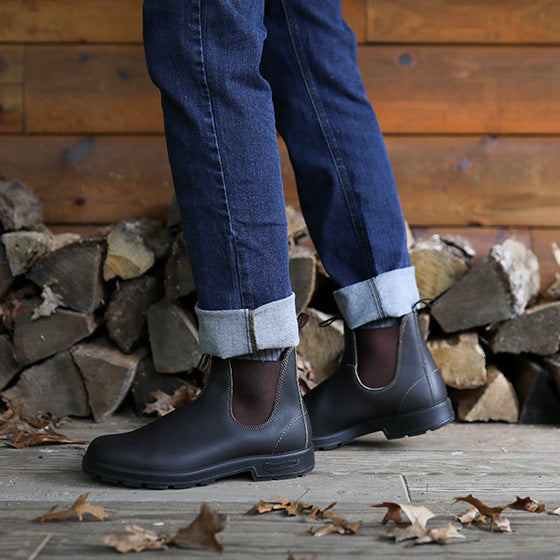
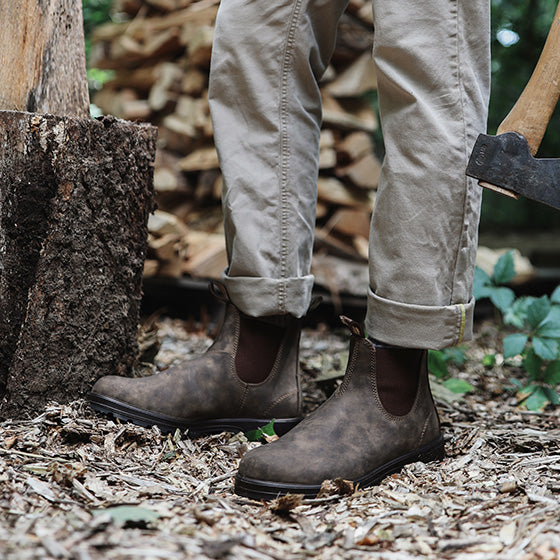
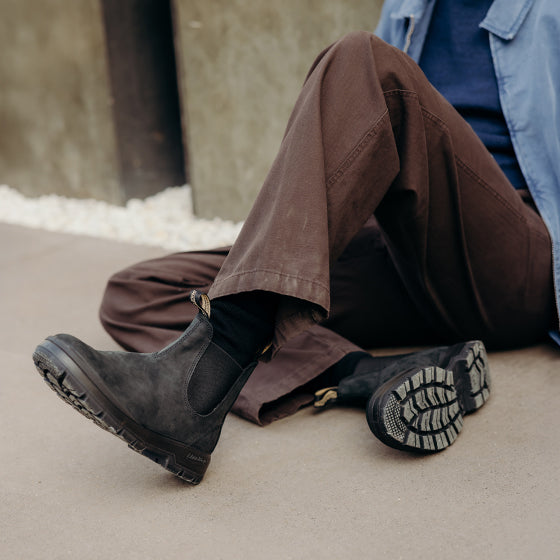
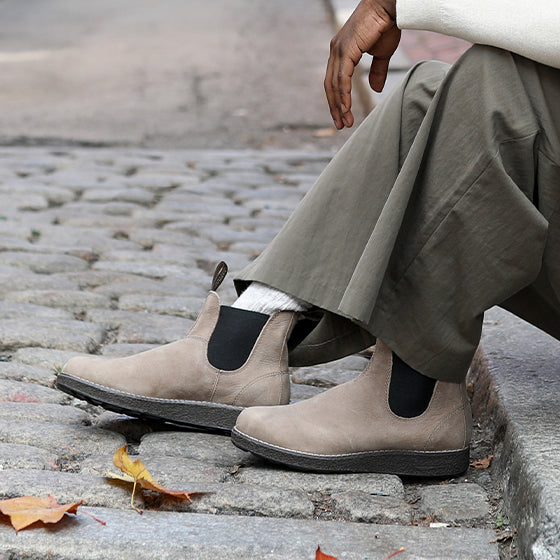
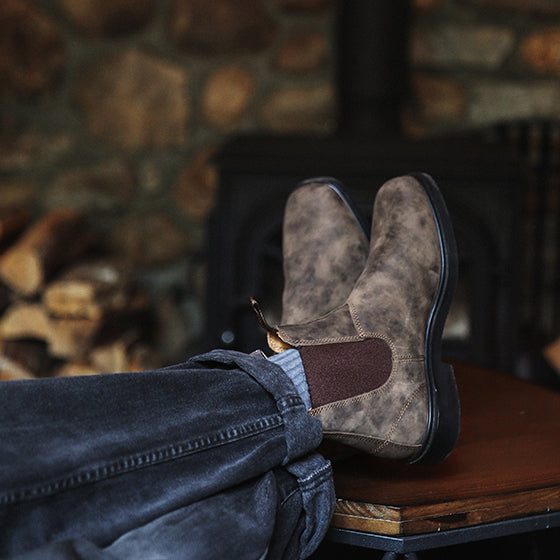
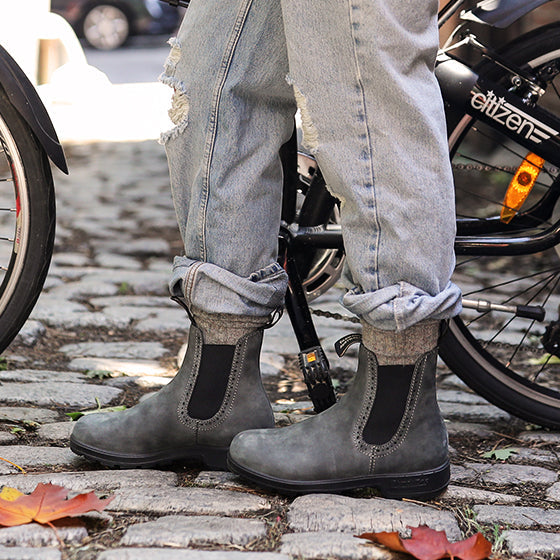
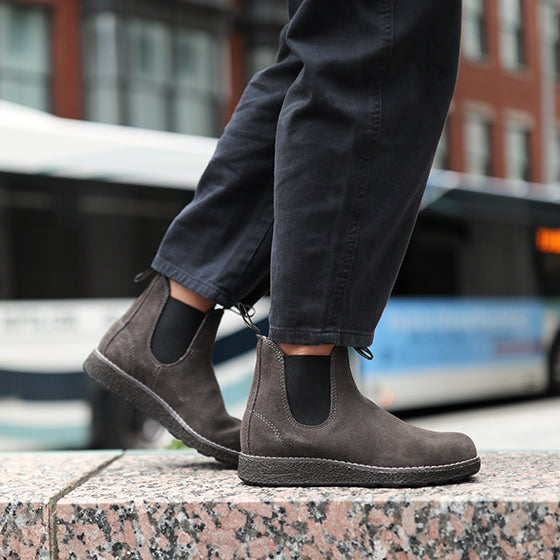
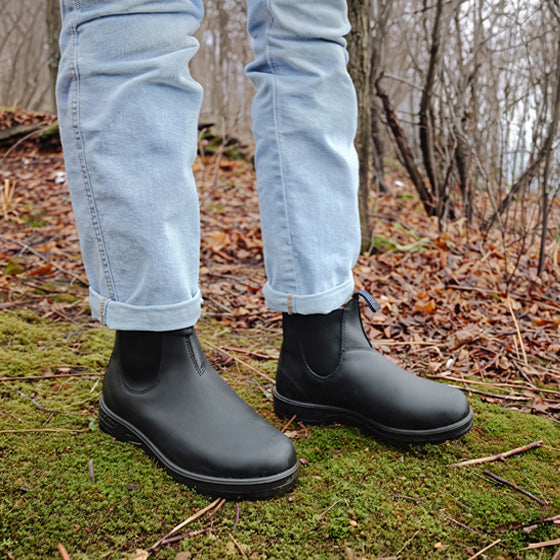
Chelsea boots occupy the useful territory between casual footwear and dress shoes. Wear them with jeans and a T-shirt and they look relaxed. Combine the same boots with chinos, a button-up shirt and blazer and they're suitable for a much smarter setting.
Their pull-on construction also makes them particularly convenient when travelling. They're easy to remove at airport security when required and quick to put back on afterwards.
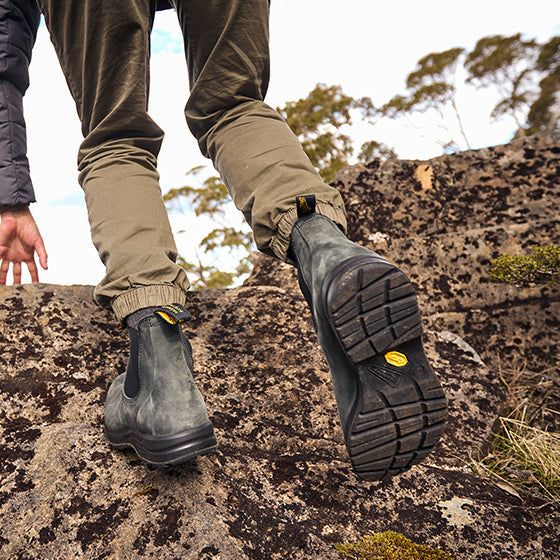
Blundstone Chelsea boots add another advantage: they're designed for regular everyday wear rather than being delicate dress shoes.
A pair from the Blundstone Men’s Original Series can work particularly well for a casual trip, combining the traditional leather Chelsea boot silhouette with a lightweight, flexible construction.
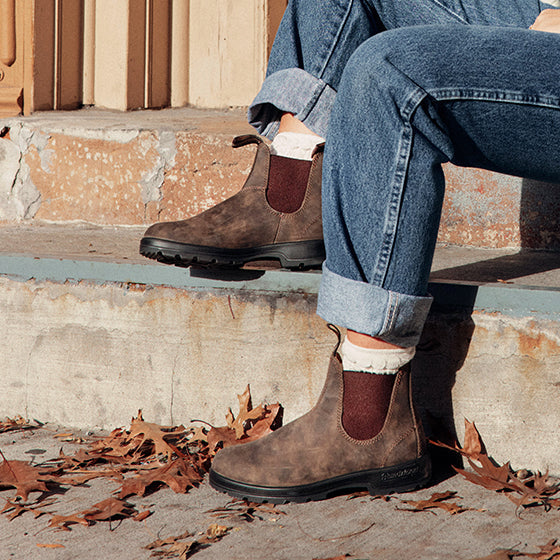
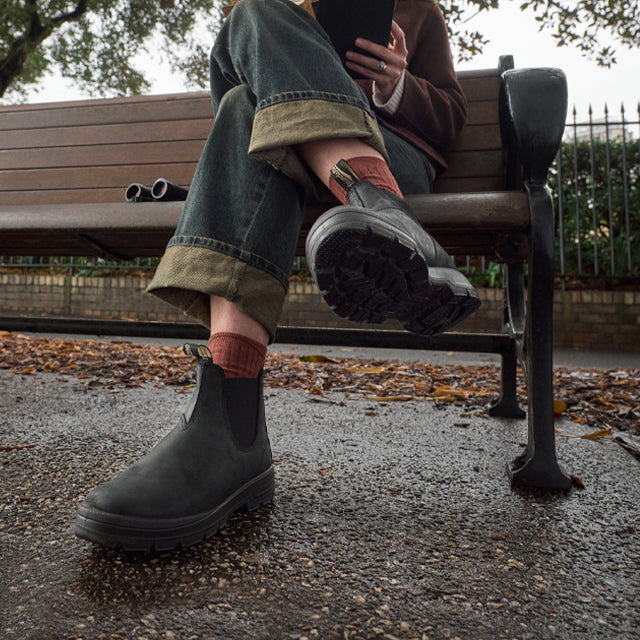
The Classic Series such as the Men’s #2540 in Claret adds additional cushioning and a leather-lined interior, which may appeal if you expect to spend long days exploring on foot.
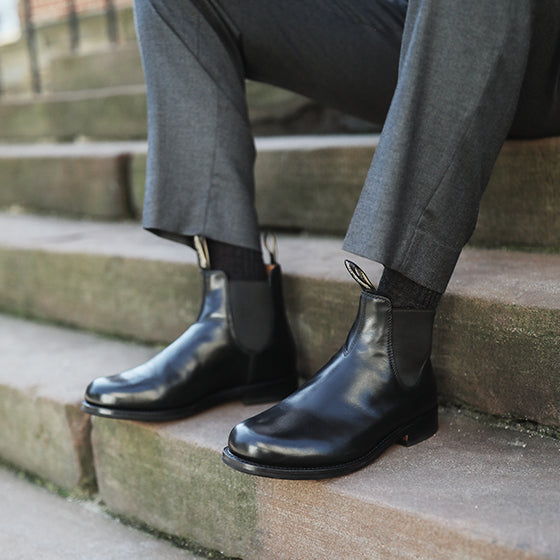
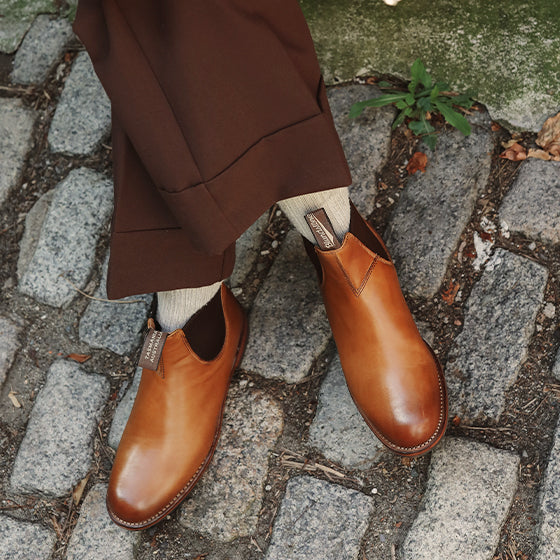
If your trip includes business meetings, smarter restaurants or events, the Blundstone Dress Series offers a more streamlined alternative. The chisel-toe shape sits naturally beneath tailored trousers and chinos while retaining the convenience of a pull-on boot.
Whichever style you choose, wearing your boots during the journey also keeps the bulkiest footwear out of your luggage.

Boots or Dress Shoes?
If you're travelling for business, you might automatically assume you need conventional dress shoes.
If the trip involves formal business professional clothing or a suit, Oxfords or similarly formal leather shoes may still be the most appropriate option.
For business casual travel, however, leather Chelsea boots can often perform the same role while being considerably more versatile outside working hours.
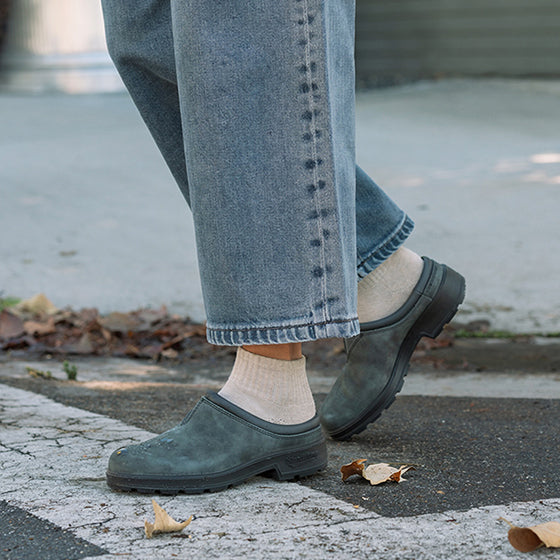
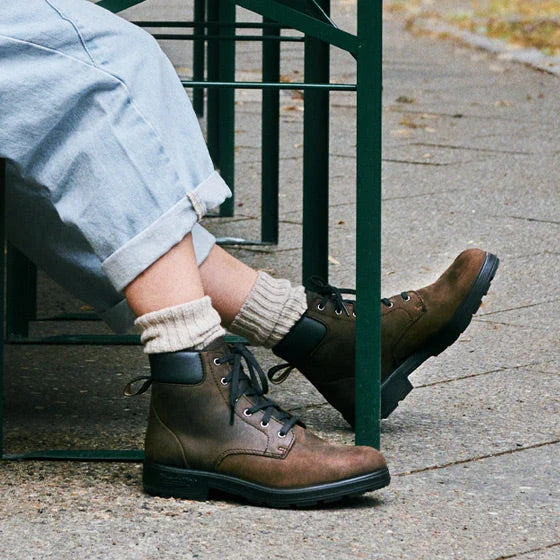
Loafers provide another lightweight option, particularly for warmer destinations. But if you're expecting rain, cooler weather or lots of walking, an ankle-height leather boot may be more practical.
The question isn't simply which footwear looks best. It's which pair works in the greatest number of situations you're actually likely to encounter.
Wear Your Bulkiest Clothes on the Plane
If you're travelling with carry-on luggage, don't pack the things that take up the most space. Wear them.
That generally means your boots or heaviest shoes, trousers, sweater and outerwear. You don't need to transform yourself into a walking wardrobe and wear six layers through the airport, but shifting the largest items onto your body can free a surprising amount of luggage space.
Keep comfort in mind, particularly on longer flights. Your travel outfit should allow you to move easily and adjust to changing temperatures.
Layering works better than relying on one very heavy garment.
Don't Overpack Underwear and Socks
Underwear and socks are small, which makes them easy to overpack. For shorter trips, taking enough for each day may be simplest. For longer journeys, packing a smaller number and washing them during the trip can significantly reduce the amount of clothing you need.
Quick-drying materials are particularly useful here. Socks also need to work with your footwear. If you're travelling with boots, pack socks that are comfortable inside them rather than discovering halfway through the trip that every pair you brought slides down around your ankles.
Pack for a Week, Not for Every Week
One of the useful things about a travel capsule wardrobe is that the packing strategy doesn't need to change dramatically as trips get longer.
For a weekend, you need very little. For a week, you need a little more. For two or three weeks, you don't necessarily need two or three times as much clothing. You need access to a washing machine or laundry service.
This is particularly useful when travelling with a carry-on or backpacking for longer periods. Once washing clothes becomes part of the plan, the relationship between trip length and luggage size changes completely.
A carefully chosen capsule wardrobe can keep going almost indefinitely.

A Simple Men's Travel Capsule Wardrobe
There isn't a perfect formula, but a practical starting point for a week-long trip might include three or four T-shirts, one or two button-up or long-sleeved shirts, two pairs of trousers, a sweater or cardigan, appropriate underwear and socks, and one piece of outerwear. Add a blazer or a suit if the trip requires smarter clothing.
For footwear, wear a versatile pair of Chelsea boots and pack lightweight sneakers if you'll use them. If the destination is hot, loafers or another lightweight shoe might make more sense than sneakers.
A smart watch or a dress watch alongside a small number of accessories can change the character of an outfit without adding much weight. From that relatively small collection, you can create enough combinations to avoid feeling as though you're wearing the same outfit every day.
The Best Travel Wardrobe
There's a temptation to treat travel clothing as an entirely separate category and buy a collection of specialist garments before going anywhere.
Sometimes technical travel clothes are useful. Quick-drying fabrics, breathable materials and wrinkle-resistant shirts can solve genuine problems.
A good men's travel capsule wardrobe should feel like a condensed version of the way you normally dress, not a costume you've assembled specifically for airports.
Choose versatile pieces, stick broadly to compatible colors and think carefully about footwear. Wear your bulkiest items during the journey and resist packing clothes for imaginary situations that probably aren't going to happen.
Most importantly, pack things you know you'll wear. Travelling light becomes much easier when you're not carrying half your wardrobe just in case.