

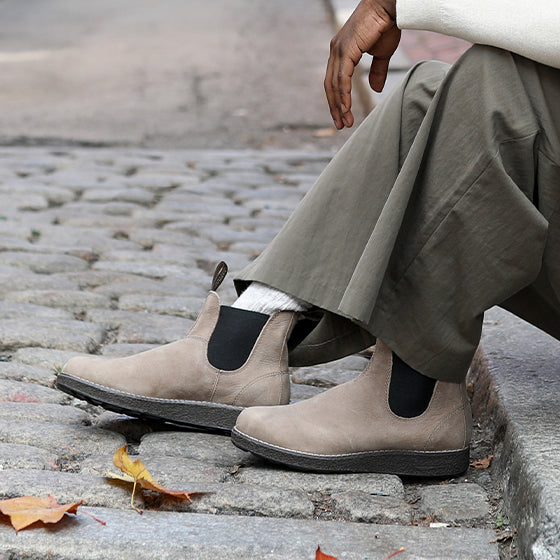
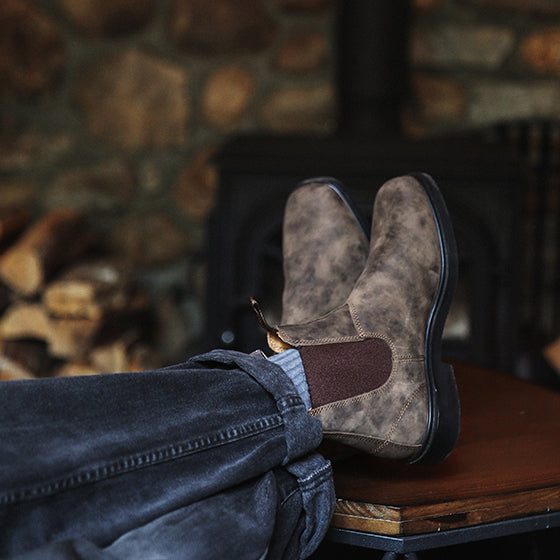

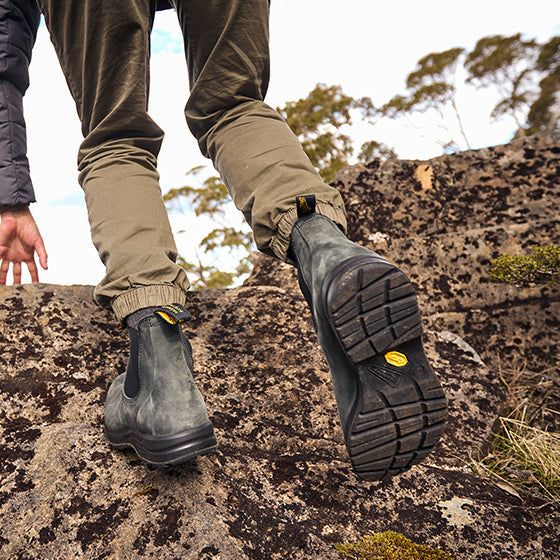

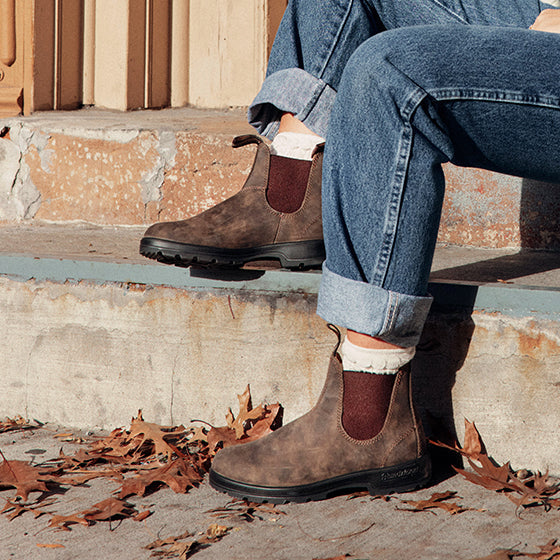





The short answer is yes. Boots can absolutely be worn as part of a business casual outfit, provided you choose the right style and pair them with the right clothes.
Business casual has always occupied the space between formal business wear and everyday casual clothing. It allows you to leave the suit and traditional dress shoes at home without turning up to work in whatever you happened to wear at the weekend.
A well-made pair of leather Chelsea boots can work with everything from chinos and a button-down shirt to tailored trousers, a blazer or a skirt. The key is understanding where your workplace sits on the broad spectrum of business casual dress.

What Does Business Casual Mean?
There isn't a universal business casual dress code. At its smartest, business casual might mean tailored trousers, a dress shirt and blazer for men, or tailored trousers, a blouse, dress or skirt for women. At the more relaxed end, chinos, jeans, knitwear, a smart T-shirt and clean, understated footwear may all be acceptable. Ultimately, it all depends on the dress code of your employer.
The important distinction is between business casual and business professional. Business professional clothing generally retains much of traditional formal wear. A suit, formal dress shirt and leather shoes such as Oxfords or loafers are still standard choices in many workplaces.
Business casual gives you more freedom. That distinction is particularly useful when choosing footwear. Sneakers may be acceptable in a creative office but feel too casual in another workplace. Traditional dress shoes can create the opposite problem, making an otherwise relaxed outfit look unnecessarily formal. Business casual boots sit comfortably between those two extremes.
What Boots Are Appropriate for Business Casual?
Not every pair of boots works equally well with business casual clothing. As a general rule, boots with a simple silhouette, and leather or suede uppers are easiest to incorporate into a business casual wardrobe.
Chelsea boots are an obvious example. Their ankle-height design and absence of laces create clean lines that work naturally with tailored clothing. They can perform much the same role as loafers or other leather shoes.
Colour matters too. Black, brown, tan and other neutral colors are generally easier to combine with business casual clothing than very bright or heavily contrasting footwear.
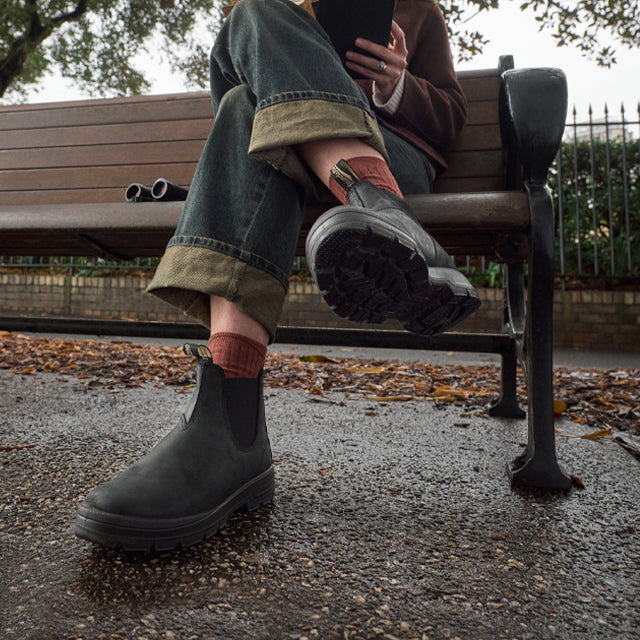
You should also think about the overall profile of the boot. Chunkier boots naturally lean towards casual wear and workwear, while slimmer dress boots tend to look more at home alongside tailoring.

Chelsea Boots and Business Casual
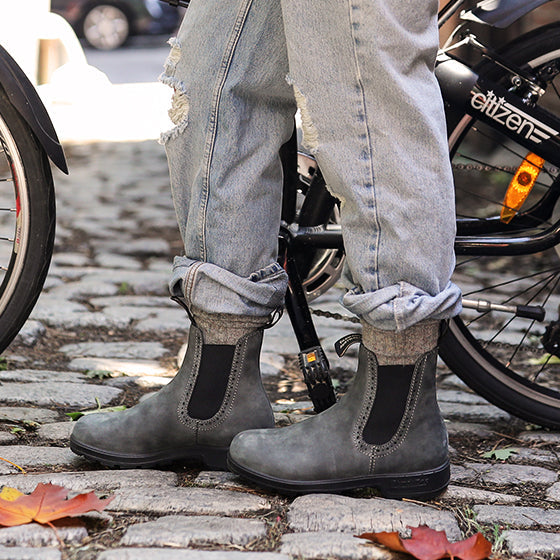
Few styles bridge casual and formal clothing as easily as Chelsea boots. With jeans and a T-shirt, they can look distinctly casual. Change the jeans for tailored trousers and add a button-down shirt or blazer and the same basic style becomes considerably smarter.
For women, Chelsea boots can work equally well beneath tailored trousers or with skirts and dresses. A streamlined pair of leather boots provides a useful alternative to heels, loafers or more traditional women's dress shoes, particularly when you want footwear that can comfortably take you through a full day. Chelsea boots are much more comfortable to wear when compared to high heels, which can pinch and squeeze. Another advantage is weight shift; flat shoes share weight evenly, but heels push the load onto the front of your foot and toes.
That adaptability makes Chelsea boots particularly useful if your working day has your moving around a lot. The same footwear can take you from a commute to the office, out for lunch and on to an evening in town without requiring a costume change halfway through the day.
Choosing Blundstone Boots for Business Casual Wear
Blundstone may be best known for rugged Chelsea boots, but several styles have a more refined shape specifically suited to smarter outfits.
The Blundstone Dress Series models use an elongated chisel toe. The result is a sleeker silhouette that sits particularly well beneath tailored trousers and chinos while retaining the practical pull-on construction of a Chelsea boot.
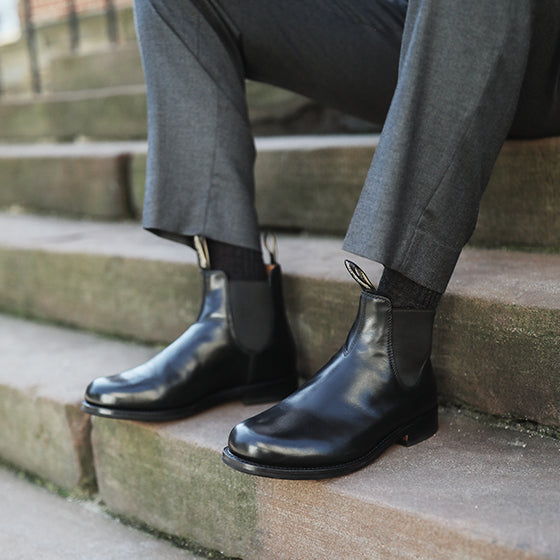
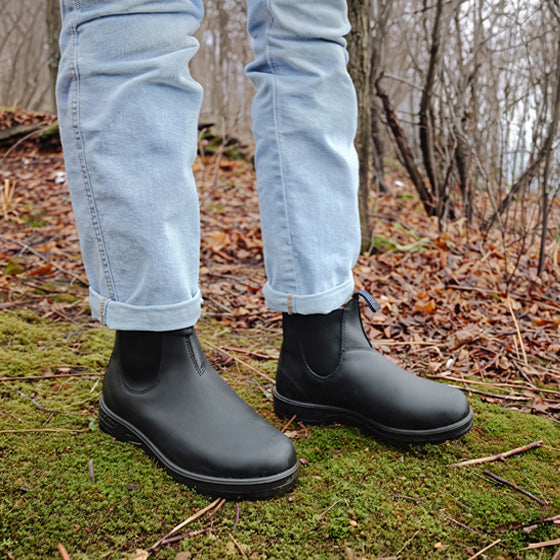
For a classic black option, the Blundstone #063 Black combines full-grain leather with a leather lining and the distinctive chisel-toe Dress Series shape. Its understated black finish makes it an easy partner for black, charcoal, navy and other neutral colors.
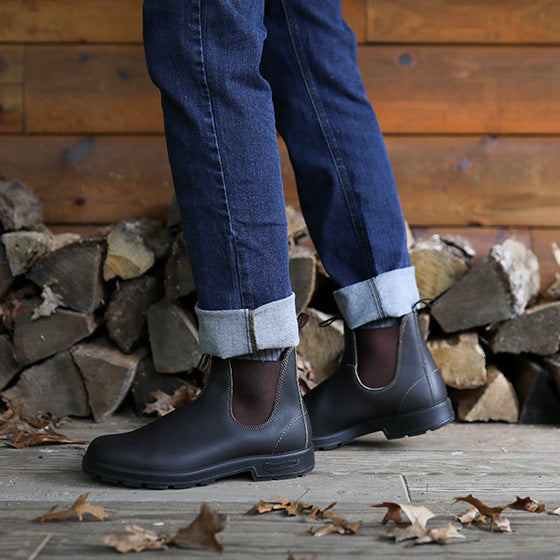
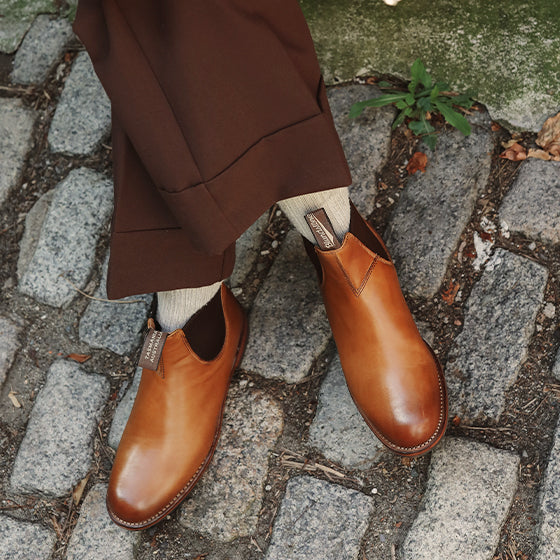
The Blundstone #062 stout brown offers the same dressier profile in brown leather. It works particularly well when a black boot would feel slightly too formal, pairing naturally with navy, beige, olive and earth-toned clothing.
Another option is the Blundstone #1900 in chestnut brown, which uses full-grain leather. The warmer, more characterful finish makes it particularly suited to outfits that deliberately mix smart and casual elements.
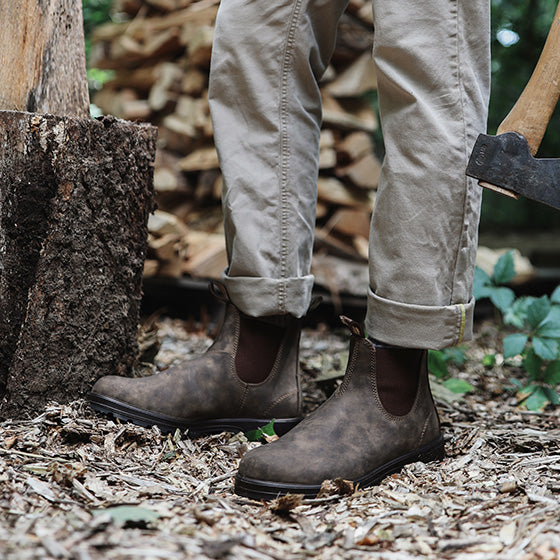
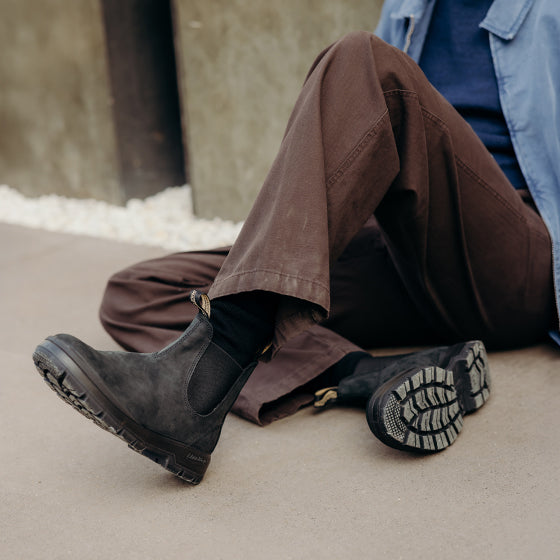
The Blundstone #1306 rustic brown and #1308 rustic black offer another interpretation of the Dress Series silhouette, combining the chisel toe with waxed nubuck uppers. These can be useful when you want your business casual boots to retain more texture and character rather than resemble conventional dress shoes.
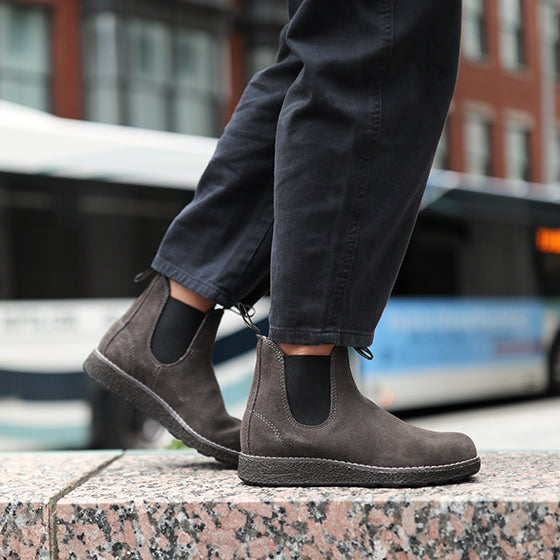
For an alternative look, suede can work extremely well in less formal workplaces. Styles such as the Blundstone #2581 tobacco suede and #2582 steel grey suede bring texture to the streamlined Dress Series shape and can be paired with chinos, tailored trousers, skirts and other business casual staples.
How Men Can Wear Boots for Business Casual
For men, the easiest approach is to treat dress boots much as you would a pair of smart leather shoes.
Start with chinos or tailored trousers. Navy, charcoal, stone, khaki and olive all provide versatile foundations for a business casual wardrobe.
Add a button-down shirt, Oxford shirt, polo shirt or fine knit depending on the season and your workplace. A blazer can immediately make the outfit smarter without pushing it into full business professional territory.
Black leather boots are particularly effective with charcoal or darker trousers, while brown leather boots offer more contrast with navy and lighter chinos. A suede boot can soften an outfit further and works particularly well with textured fabrics and less structured tailoring.
Can You Wear Chelsea Boots With a Suit?
This moves beyond business casual and requires a little more care. A sleek pair of black leather Blundstone dress Chelsea boots can work with a modern suit, particularly when the trousers have a relatively narrow opening and sit cleanly over the top of the boot.
The smoother and simpler the boot, the easier this becomes. Brown dress boots can also work with navy and less formal suits, particularly when you aren't trying to create a traditional corporate look.

How Women Can Wear Boots for Business Casual
Business casual boots give women an enormous range of options because they work with trousers, skirts and dresses.
For a straightforward office outfit, combine black Chelsea boots with tailored trousers and a blouse, shirt or knit. Add a blazer when you need to make the outfit smarter.
Brown leather or suede boots can work particularly well with lighter trousers and neutral colors, creating a softer alternative to black footwear.
With a skirt or dress, consider the visual weight and heel height of the boot. A streamlined ankle boot generally creates a smarter impression than a very chunky workwear-inspired design.
Flat or low-heeled Chelsea boots can provide the polished appearance required for business casual dress while remaining practical for commuting and spending long periods on your feet.
Blundstone's women's range includes styles such as the Women's Dress #062 in stout brown and the Women's Dress #2581 in tobacco suede, which combine the familiar Chelsea boot construction.
For women who prefer a more pronounced heel, the Women's series #1671 heeled boots in black, and Women's Series #1673 heeled boots in antique brown feature a durable and sturdy 5 cm (2") heel that provides added height and comfort.
Blundstone also offer high heeled boots such as the Woman's Series #2365 in black and #2366 in stout brown. These feature a 3" Cuban heel which are designed for all-day wear.
This makes boots particularly useful for building a flexible business casual wardrobe. Rather than owning completely separate footwear for work and leisure, a versatile pair of leather boots can comfortably perform both roles.
Leather or Suede Boots for the Office?
Smooth leather boots are generally the smarter option. Black leather is particularly easy to incorporate into a more conservative dress code, while brown leather tends to feel slightly more relaxed.
Suede introduces texture and usually makes an outfit feel softer and less formal. Tobacco, brown and grey suede boots work especially well with chinos, wool trousers, knitwear and other textured fabrics.
If your workplace sits towards the business professional end of the spectrum, leather is usually the safer choice. In a more relaxed casual setting, suede gives you considerably more freedom.
What Boots Should You Avoid for Business Casual?
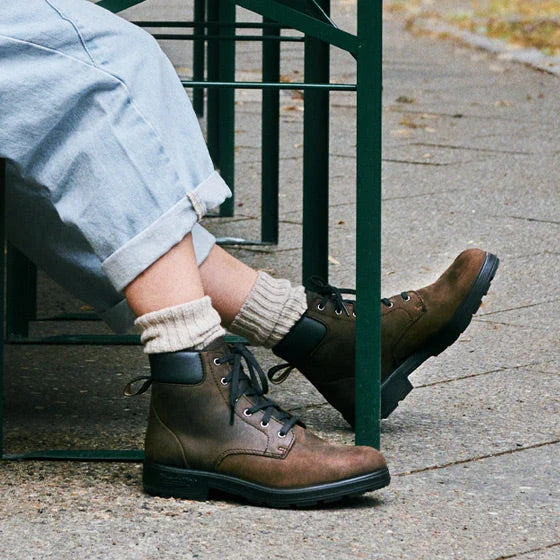
The easiest way to judge a pair of boots is to look at the entire outfit rather than apply rigid rules to individual styles. Heavy-duty work boots are designed first and foremost for protection and durability. Their thicker soles, reinforced construction and more substantial shape naturally make them look more at home with workwear than tailoring.
Likewise, cowboy boots have a very distinctive visual identity. They can certainly be worn well, but whether they qualify as business casual depends heavily on location, workplace culture and the rest of the outfit.
Very chunky soles, highly distressed leather, conspicuous hardware and brightly coloured details all make boots more casual.
That doesn't mean you need footwear that looks like traditional dress shoes. It simply means allowing one element of the outfit to balance another.
How Should Business Casual Boots Fit With Trousers?
Trouser length makes a surprisingly large difference. Ideally, trousers should fall cleanly over the top of the boot without large amounts of fabric gathering around the ankle. This is particularly important with slimmer dress boots, where excessive bunching can undermine the clean silhouette.
Chinos and tailored trousers can either meet the top of the boot or sit slightly above it depending on their cut. Very wide trousers can also work, but the relationship between the hem and footwear becomes more important. For a smarter outfit, think in terms of clean lines from waist to heel.
Can You Wear Boots on Casual Friday?
Casual Friday is where the versatility of Chelsea boots becomes particularly useful. Swap tailored trousers for dark jeans or chinos, keep the same boots and add a polo, knitwear, button-down shirt or even a well-cut T-shirt.
This is also where more rugged leather boots can enter the picture. A classic pair of Blundstones with jeans or chinos can make perfect sense in an office where the dress code becomes more relaxed towards the end of the week.
Building a Business Casual Wardrobe Around Boots
To build a business casual wardrobe start with neutral colors and versatile staples: tailored trousers, chinos, button-down shirts, simple knitwear, skirts, dresses and an unstructured blazer. Then choose footwear that can move between those pieces.
A pair of black leather Chelsea boots covers the smarter end of the spectrum. Brown leather or suede boots introduce a more relaxed option.

Are Boots Business Casual?
The right boots can be an excellent part of business casual dress for both men and women. For smarter workplaces, choose streamlined leather boots in black, brown or another neutral color.
Blundstone Chelsea boots are particularly effective because their simple construction sits naturally between formal dress shoes and casual footwear. Blundstone's Dress Series takes that idea further with a slimmer, chisel-toe profile designed to move easily between smart and casual clothing.